
Asphalt Shingle Roofing for Arizona Homes
Architectural asphalt shingles are a common sloped residential system, but Arizona's extreme heat and UV change the way they age. Understanding how heat, granule loss and ventilation interact helps you read the condition of a shingle roof correctly.
How This Roof System Works
Understanding the layers and details that make up the system is the first step to reading its condition correctly.
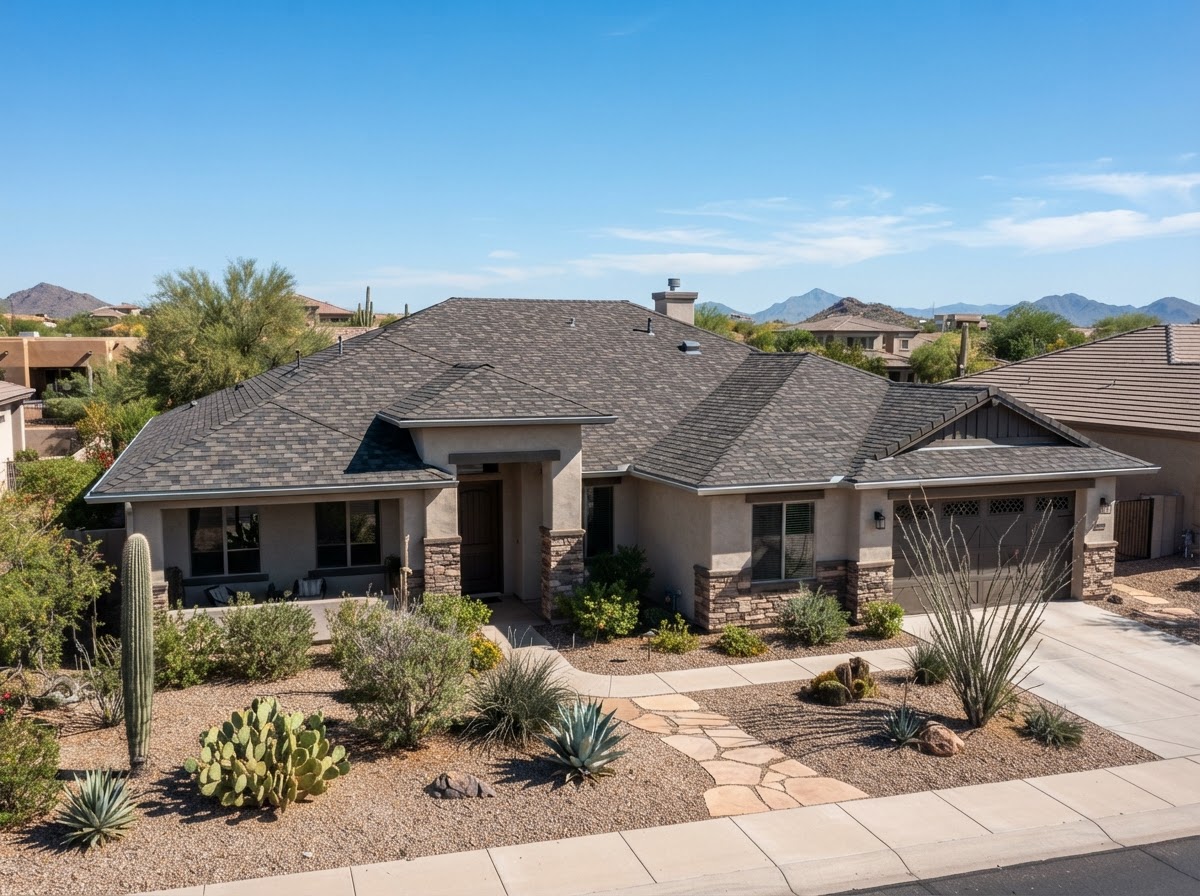
Asphalt shingle roofing uses fiberglass-mat shingles saturated with asphalt and surfaced with mineral granules. Installed over underlayment on a sloped deck, shingles shed water down the slope while flashing and sealing at valleys, penetrations and edges keep water out at the details.
Common Applications
- Sloped residential roofs across Tucson and the Phoenix metro.
- Homes where a lighter-weight, cost-effective sloped system is appropriate.
- Additions and patio roofs tied into an existing sloped roof.
Built for Desert Conditions
Arizona's heat, UV and monsoon exposure shape how every roof system performs. These are the reasons this system is common across Tucson and the Phoenix metro.
- 01Shingles are widely available and suited to standard sloped residential construction.
- 02Architectural shingles offer a dimensioned appearance at a moderate weight.
- 03Properly ventilated shingle systems can perform well when detailed for desert exposure.
Strengths of the System
- Moderate weight suitable for standard residential roof decks.
- Cost-effective sloped roofing with good material availability.
- Dimensional architectural profiles offer a finished residential look.
- Repairs to localized damage are generally straightforward.
Where It Falls Short
- 01Asphaltic materials age faster under intense Arizona heat and UV than in milder climates.
- 02Granule loss exposes the asphalt to accelerated UV degradation.
- 03Heat buildup in an under-ventilated attic shortens shingle life from below.
- 04Wind uplift during monsoons can tear or lift shingles at edges and penetrations.
Where This System Tends to Fail
Knowing where a system typically breaks down helps you spot trouble early and ask the right questions during an inspection.
- 01Granule loss leaving asphalt exposed to UV, leading to cracking.
- 02Curling and cupping of shingles under sustained high heat.
- 03Cracking and brittleness as the asphalt ages and dries out.
- 04Wind uplift at eaves, rakes and penetrations during monsoon gusts.
- 05Flashing and sealant failures at valleys, walls and penetrations.
What to Watch and What to Do
Four lenses on the same system — what an inspection covers, when a repair holds, when replacement is warranted, and what maintenance keeps it sound.
- Measure granule loss, including accumulation in gutters and at downspouts.
- Check for curling, cracking and shingle brittleness.
- Inspect flashing at valleys, skylights, walls and all penetrations.
- Evaluate attic ventilation, which directly affects shingle longevity.
- Assess decking condition where accessible.
- Replace localized damaged shingles when the surrounding field is sound.
- Restore flashing and sealants at penetrations before leaks develop.
- Address ventilation shortfalls that are shortening shingle life from below.
- Confirm the underlayment beneath damaged areas is intact.
- Replacement is warranted when granule loss and cracking are widespread.
- Tear-off lets us inspect and replace any damaged decking.
- Specify a system and underlayment rated for desert heat exposure.
- Correct ventilation as part of the replacement to protect the new system.
- Annual or pre-monsoon inspection of shingles, flashing and penetrations.
- Clear debris from valleys and gutters to prevent water damming.
- Reseal penetrations as sealants degrade under UV.
- Monitor granule loss over time to anticipate replacement timing.
Tucson Metro
- Sustained Tucson summer heat accelerates asphalt aging; ventilation is especially important here.
- Monsoon wind uplift is a leading cause of localized shingle damage on Tucson homes.
- Shingle roofs on older Tucson housing stock may be near or past a normal service cycle.
Phoenix Metro
- Prolonged extreme heat in the Phoenix metro drives faster granule loss and curling.
- Rapid UV aging of exposed asphalt is common across Phoenix shingle roofs.
- Dust and debris in valleys can retain moisture and accelerate flashing wear.
Pair This System With the Right Service
A roof system is only part of the picture. These services keep it inspected, repaired, maintained or replaced as conditions change.
Systems That Work Alongside This One
Understanding how systems compare helps you choose the right one — or the right combination — for your property.
Serving Tucson and Phoenix
We install, inspect, repair and maintain this system across the Tucson and Phoenix metropolitan areas and surrounding Arizona communities. Select a city below for dedicated local roofing information.
Common Questions About This System
Straightforward, technically credible answers for Arizona property owners.
Intense, prolonged heat and UV break down the asphalt and accelerate granule loss, which then exposes the shingle to faster UV degradation. Curling, cracking and brittleness follow. Good attic ventilation reduces heat buildup from below and helps extend shingle life.
The mineral granules protect the asphalt from UV. As they wear off — visible in gutters and at downspouts — the asphalt is exposed and degrades faster. Significant granule loss is an indicator the shingles are aging toward replacement.
Localized wind uplift at eaves, rakes or penetrations can often be repaired when the surrounding field is sound. Widespread tearing or lifting across the roof usually points toward replacement.
Heat buildup in an under-ventilated attic bakes the shingles from below, shortening their life. Correcting ventilation is part of both repair and replacement to protect the system in the Arizona climate.
Not Sure What Your Roof Needs?
Start with a professional roof inspection. We will evaluate the condition of the roofing system and explain the available options clearly.