
Maintenance That Extends the Life of a Roof.
A roof ages every year under Arizona sun and monsoon stress. Scheduled maintenance catches small conditions before they become failures — clearing drainage, checking flashing and penetrations, and documenting the system so you can plan rather than react.
Recognizing the Right Time
Roofing work is most effective when it addresses a clearly identified condition rather than a guess. The points below describe the situations where this service typically applies.
- 01An annual or pre-monsoon check of an aging roof.
- 02A roof with a history of minor, recurring issues.
- 03After dust accumulation or debris from a storm season.
- 04Before the warranty period on a newer system lapses.
- 05A flat roof where drainage and ponding need monitoring.
Signs Worth Investigating
Not every symptom means immediate failure, but several of these together usually call for a closer look.
- 01Debris building up in valleys, gutters or at scuppers.
- 02Vegetation growth in shaded or moisture-trapping areas.
- 03Sealants at penetrations beginning to crack or shrink.
- 04Drainage paths that are slow to clear after rain.
- 05Minor granule or coating loss visible at downspouts.
- 06A roof that has not been evaluated in over a year.
Engineered for Desert Conditions
Phoenix roofing systems face conditions that are uncommon in most of the country. The factors below shape how we approach this service.
- Pre-monsoon maintenance is especially valuable before the season that does the most damage.
- Dust and debris accumulate quickly and can block drainage on flat and low-slope roofs.
- UV degrades exposed sealants and coatings between maintenance visits.
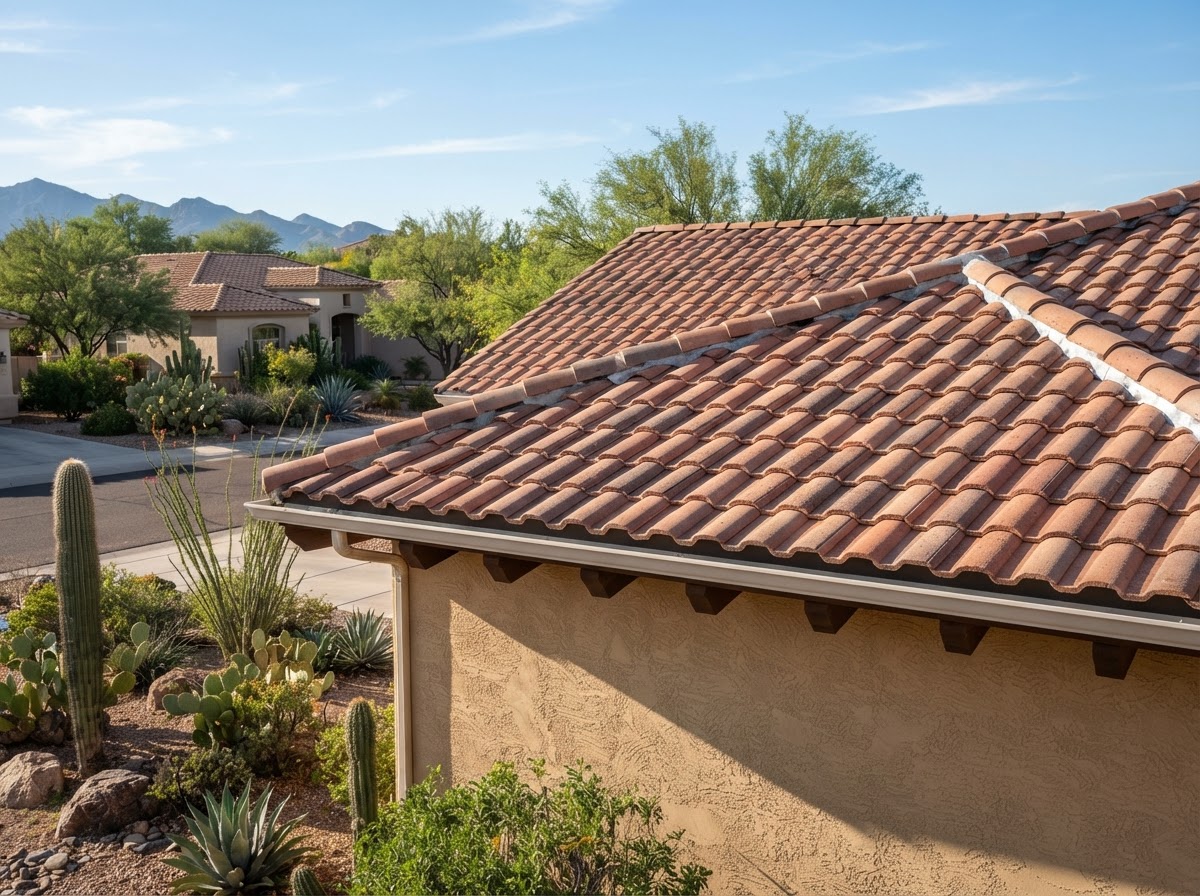
- Tile roofs need valley and flashing checks even when the tile looks intact.
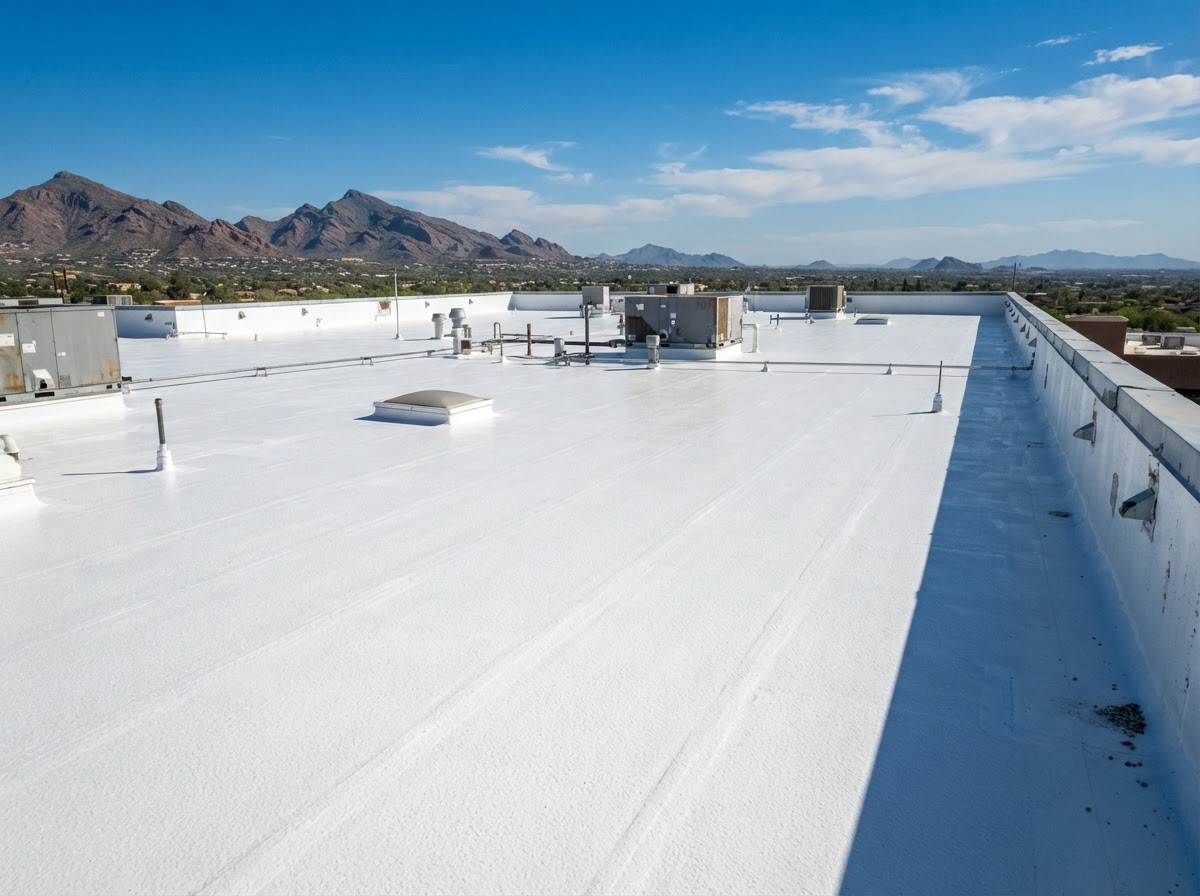
- Coatings on flat roofs require periodic inspection to remain protective.
A Documented Assessment
Before recommending work, we document the condition of the relevant components so you can make a clear decision.
Clearance of debris from drainage paths, valleys and gutters.
Condition of flashing and sealants at all penetrations.
Underlayment exposure where tiles have shifted or cracked.
Drainage and ponding on flat and low-slope roofs.
Coating condition where reflective coatings are in use.
Any changes in condition since the last maintenance visit.
From Assessment to Completed Work
The same disciplined sequence applies to every roofing scope — inspect, document, recommend and complete — so you know what your roof needs before any money is spent.
Walk the roof and document the current condition.
Record maintenance needs and any developing issues.
Recommend minor service now and flag anything to watch.
Complete the maintenance and note the next service interval.
Systems Relevant to This Service
Tile Roofing
Clay and concrete tile engineered for intense desert sun exposure.
Roof Coatings
Elastomeric and reflective coatings that extend roof service life.
Flat Roofing
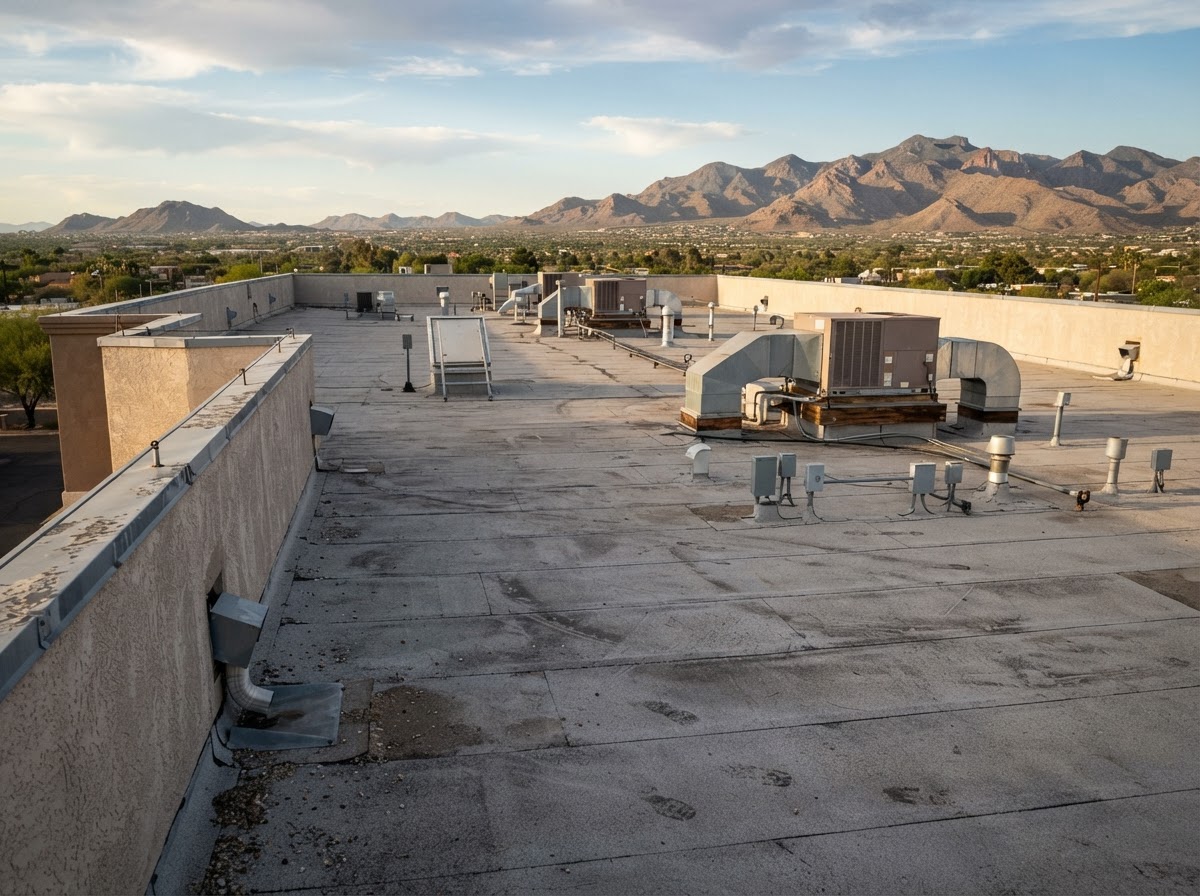
Built-up and single-ply flat systems for low-slope applications.
Modified Bitumen
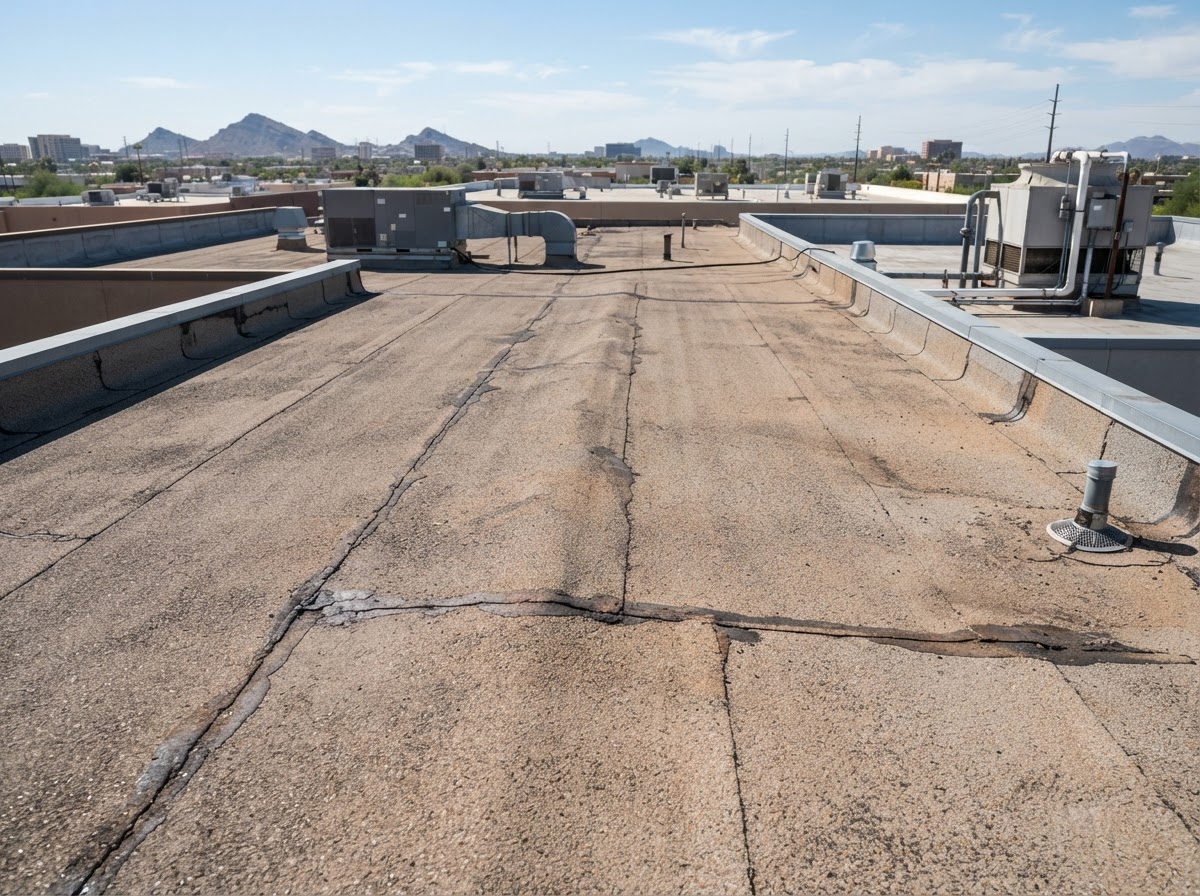
Multi-ply modified bitumen for resilient commercial flat roofs.
Common Questions
Straightforward answers about this service and how it applies to Arizona roofing systems.
We recommend at least once a year, with an additional visit before monsoon season for roofs that take heavy exposure. Flat and low-slope roofs often benefit from more frequent drainage checks.
Clearing debris from drainage paths and valleys, checking flashing and sealants at penetrations, inspecting underlayment where tiles have shifted, and documenting the condition so you can plan ahead.
It cannot guarantee a leak-free roof, but it catches many conditions — blocked drainage, failed sealants, displaced tile — before they lead to water entry.
Yes. We maintain flat, foam and coated commercial roofs, including drainage, penetration and coating checks.
Not Sure What Your Roof Needs?
Start with a professional roof inspection. We will evaluate the condition of the roofing system and explain the available options clearly.