
Spray Foam Roofing for Arizona Properties
Spray polyurethane foam (SPF) roofing is commonly encountered across Arizona because it applies seamlessly and adds insulation over low-slope roofs. Its performance depends on a protective coating over the foam and on periodic recoating to defend against UV.
How This Roof System Works
Understanding the layers and details that make up the system is the first step to reading its condition correctly.
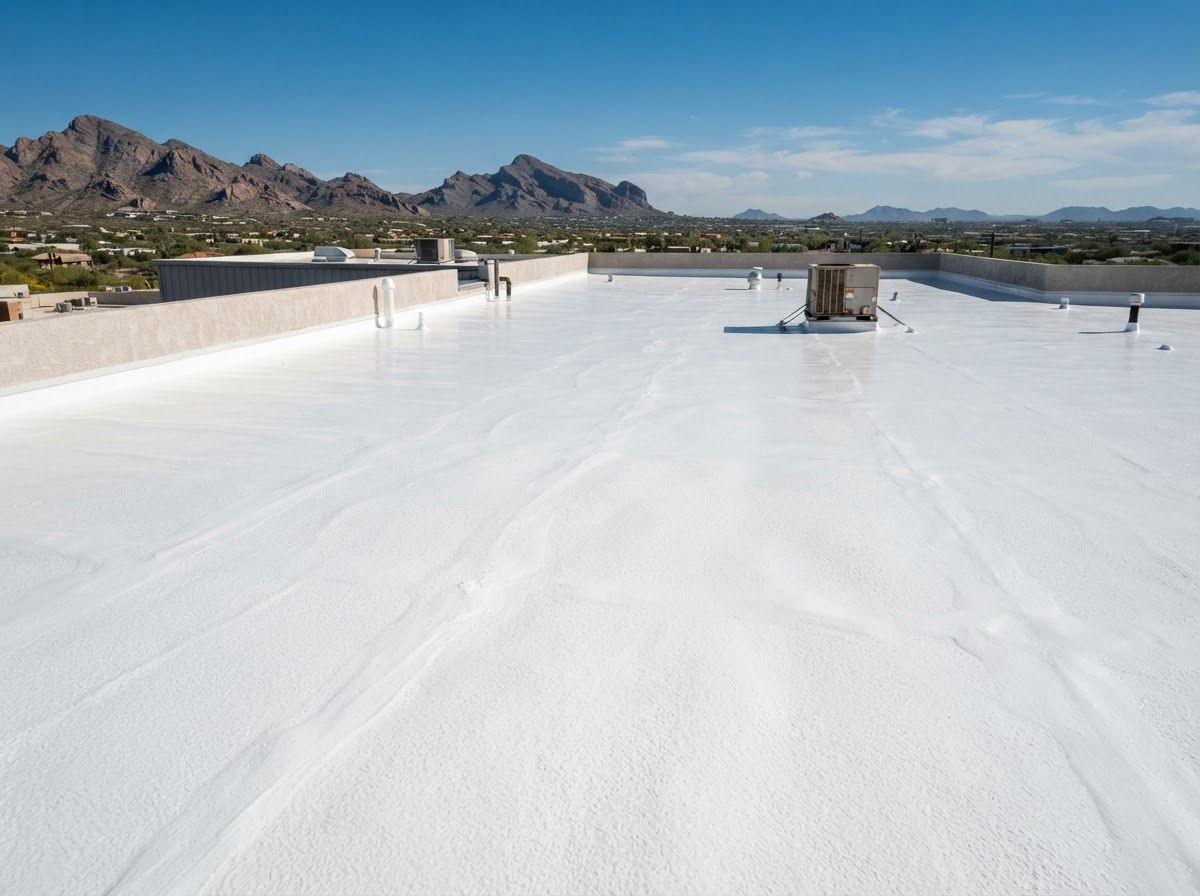
Spray foam roofing is a seamless, sprayed-in-place polyurethane foam applied over a prepared low-slope substrate. The foam self-flashes around penetrations and edges, and a protective elastomeric coating over the foam provides waterproofing and UV protection. The coating, not the foam, is the layer that must be maintained and recoated.
Common Applications
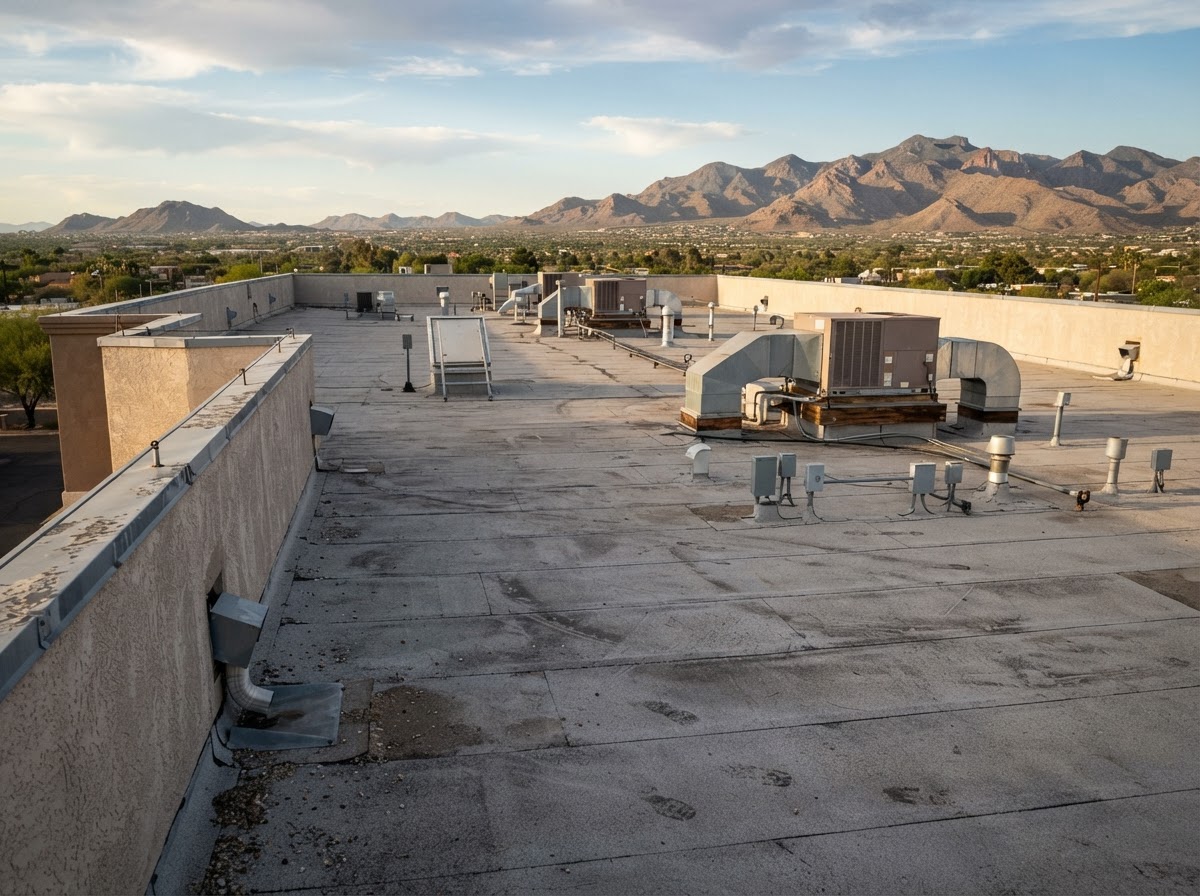
- Residential flat and low-slope roofs, including many Tucson homes.
- Commercial low-slope roofs across Tucson and the Phoenix metro.
- Roofs where a seamless, self-flashing system and added insulation are desired.
Built for Desert Conditions
Arizona's heat, UV and monsoon exposure shape how every roof system performs. These are the reasons this system is common across Tucson and the Phoenix metro.
- 01The seamless application suits the flat and low-slope architecture common in the region.
- 02Added insulation is relevant under intense, prolonged desert heat.
- 03Self-flashing around penetrations reduces the number of detail leak points.
- 04A reflective coating over the foam helps manage solar gain.
Strengths of the System
- Seamless application eliminates most seamed leak points.
- Self-flashes around penetrations, curbs and edges.
- Adds insulating value over the roof substrate.
- Repairable — punctures and damage can typically be patched and recoated.
Where It Falls Short
- 01Foam must be protected by a coating; UV degrades exposed foam.
- 02Performance depends on substrate preparation before application.
- 03Drainage still matters — foam does not solve ponding on its own.
- 04Coating requires periodic recoating to maintain protection.
Where This System Tends to Fail
Knowing where a system typically breaks down helps you spot trouble early and ask the right questions during an inspection.
- 01UV degradation of foam where the coating has worn or been punctured.
- 02Punctures from foot traffic, dropped tools or debris.
- 03Ponding water where drainage is inadequate.
- 04Poor substrate preparation causing adhesion failure.
- 05Coating aging out and exposing the foam beneath.
What to Watch and What to Do
Four lenses on the same system — what an inspection covers, when a repair holds, when replacement is warranted, and what maintenance keeps it sound.
- Check coating condition and thickness across the roof.
- Identify punctures, exposed foam and areas of coating breakdown.
- Map drainage and any ponding areas.
- Inspect flashing and coating continuity at all penetrations.
- Assess adhesion and substrate condition where accessible.
- Patch punctures and recoat localized coating breakdown promptly.
- Restore coating continuity at penetrations before foam degrades.
- Address drainage and ponding before any repair will hold.
- Evaluate whether a full recoat is due.
- Replacement is warranted when foam has degraded broadly from UV exposure.
- Recoating on an appropriate interval can extend service life without replacement.
- Correct drainage and substrate preparation as part of any re-foam.
- Specify a coating system suited to the building's exposure.
- Inspect the coating at least annually for wear and punctures.
- Recoat on an interval appropriate to the exposure to protect the foam.
- Keep the roof clear of debris that can puncture or pond water.
- Limit foot traffic and protect the coating around HVAC access.
Tucson Metro
- Foam roofing is a common low-slope system on Tucson homes and commercial buildings.
- Intense Tucson UV makes coating maintenance and recoating intervals especially important.
- Sudden monsoon rainfall tests drainage on foam roofs as much as on any flat system.
Phoenix Metro
- Prolonged extreme heat in the Phoenix metro shortens coating life and recoating intervals.
- Reflective coatings on foam roofs help manage the heavy solar gain of the Valley.
- Dust accumulation can retain moisture on the coating and accelerate wear.
Pair This System With the Right Service
A roof system is only part of the picture. These services keep it inspected, repaired, maintained or replaced as conditions change.
Systems That Work Alongside This One
Understanding how systems compare helps you choose the right one — or the right combination — for your property.
Serving Tucson and Phoenix
We install, inspect, repair and maintain this system across the Tucson and Phoenix metropolitan areas and surrounding Arizona communities. Select a city below for dedicated local roofing information.
Common Questions About This System
Straightforward, technically credible answers for Arizona property owners.
Foam adds insulation, which can reduce heat gain into the building. The actual effect on cooling costs depends on the building, its use, and existing insulation. We describe foam in terms of what it does — seamless waterproofing and added insulation — without claiming specific savings numbers.
We don't quote a fixed lifespan. The foam itself is durable, but the protective coating over it is what wears, and it must be recoated on an interval appropriate to the exposure. Maintained coating, maintained roof.
UV degrades exposed foam, so coating wear is the condition to watch. Recoating on the right interval protects the foam and extends the system. We inspect coating thickness and condition to time recoating before the foam is exposed.
Yes — foam is repairable. Punctures and localized coating breakdown can be patched and recoated without replacing the whole system. We document whether a repair will hold or whether broader recoating is due.
Not Sure What Your Roof Needs?
Start with a professional roof inspection. We will evaluate the condition of the roofing system and explain the available options clearly.