
Modified Bitumen Roofing Systems
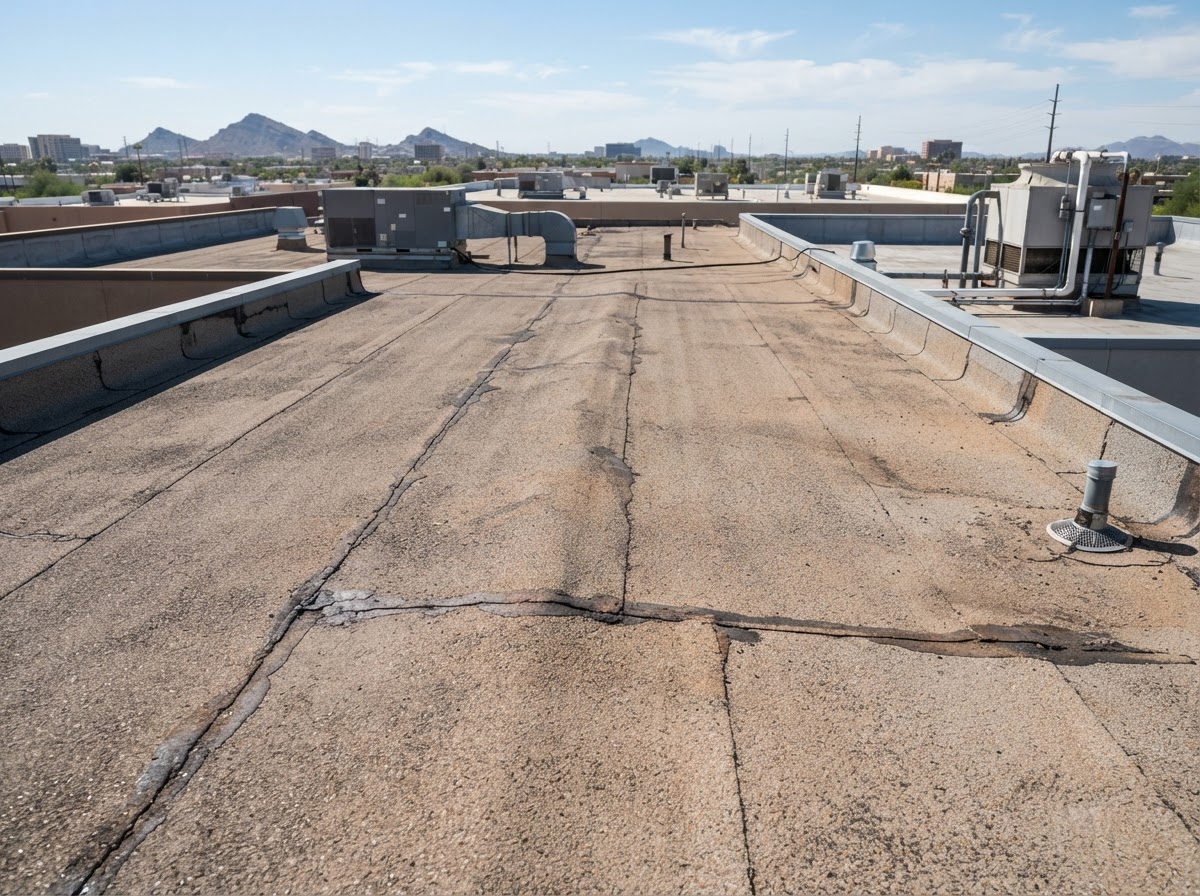
Modified bitumen is a multi-ply low-slope system widely used on commercial buildings. Its layered construction provides redundancy, but the seams, flashings and drainage details still determine how it performs under Arizona heat and monsoon exposure.
How This Roof System Works
Understanding the layers and details that make up the system is the first step to reading its condition correctly.
Modified bitumen roofing is a multi-ply membrane system made of asphalt modified with polymers, installed in rolls with overlapping seams. The plies provide layered waterproofing over a low-slope deck, with flashing at penetrations, parapets and edges tying the system together. A protective surfacing or coating defends the membrane from UV.
Common Applications
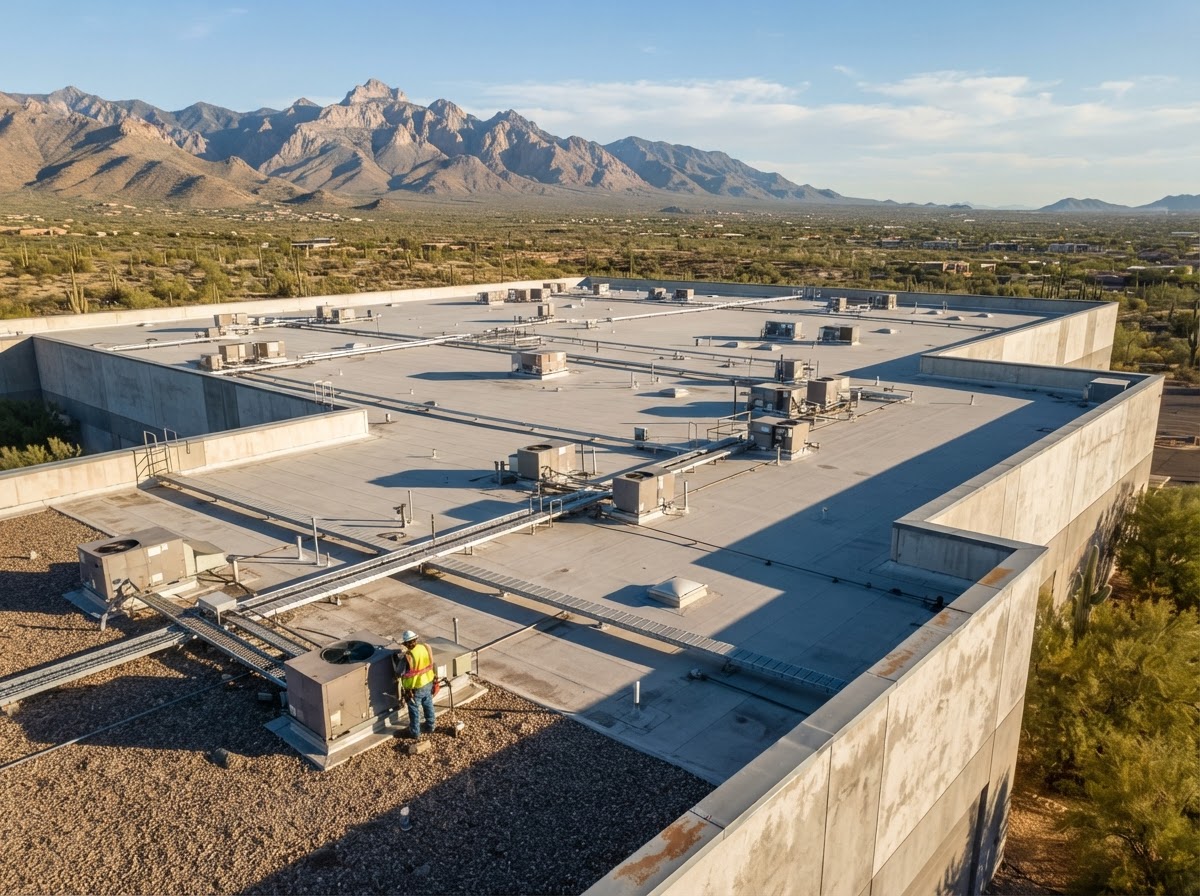
- Commercial and industrial low-slope roofs across Tucson and the Phoenix metro.
- Multi-tenant buildings where a durable, redundant membrane is desired.
- Roofs where multi-ply construction is preferred over a single-ply membrane.
Built for Desert Conditions
Arizona's heat, UV and monsoon exposure shape how every roof system performs. These are the reasons this system is common across Tucson and the Phoenix metro.
- 01Multi-ply construction offers redundancy valued on busy commercial roofs.
- 02Polymer-modified asphalt handles high heat better than older built-up asphalt.
- 03Compatible with reflective coatings to manage desert solar gain.
- 04Well suited to the flat and low-slope commercial stock across both markets.
Strengths of the System
- Multi-ply layers provide redundant waterproofing.
- Durable under foot traffic common around HVAC and equipment.
- Punctures and localized damage can be repaired within the ply system.
- Compatible with reflective coatings to extend service life.
Where It Falls Short
- 01Seams are the critical detail — laps must be properly bonded.
- 02Surface deterioration under UV requires surfacing or coating maintenance.
- 03Drainage still governs performance; ponding degrades the membrane.
- 04Flashings at penetrations need regular inspection and resealing.
Where This System Tends to Fail
Knowing where a system typically breaks down helps you spot trouble early and ask the right questions during an inspection.
- 01Seam separation where laps were not properly bonded.
- 02Surface deterioration and cracking under prolonged UV.
- 03Flashing failures at penetrations, curbs and parapets.
- 04Ponding water degrading the membrane and surfacing.
- 05Blistering where moisture was trapped during installation.
What to Watch and What to Do
Four lenses on the same system — what an inspection covers, when a repair holds, when replacement is warranted, and what maintenance keeps it sound.
- Check seam integrity across laps and at details.
- Inspect the surface for cracking, blistering and coating loss.
- Map drainage and any ponding areas.
- Check flashing at all penetrations, curbs and parapets.
- Assess surfacing or coating condition for UV protection.
- Repair seam separations and flashing failures before leaks spread.
- Patch localized membrane damage within the ply system.
- Address ponding and drainage before repairs will hold.
- Restore surfacing or coating where UV protection is failing.
- Replacement is warranted when seam or membrane failure is widespread.
- Tear-off to inspect the deck and substrate beneath.
- Correct drainage and slope as part of the new system.
- Specify a coating or surfacing suited to the exposure.
- Annual or pre-monsoon inspection of seams, flashing and surfacing.
- Keep scuppers and drains clear to prevent ponding.
- Reseal penetrations as sealants age under UV.
- Monitor surfacing and recoat on an appropriate interval.
Tucson Metro
- Modified bitumen is common on Tucson commercial and multi-tenant low-slope roofs.
- Intense UV on Tucson flat roofs makes surfacing and coating maintenance important.
- Monsoon debris can block scuppers and pond water against seams.
Phoenix Metro
- Prolonged extreme heat in the Phoenix metro accelerates surface deterioration.
- Reflective coatings extend service life on Phoenix commercial roofs under heavy solar gain.
- Thermal movement across large Phoenix roof expanses stresses seams over time.
Pair This System With the Right Service
A roof system is only part of the picture. These services keep it inspected, repaired, maintained or replaced as conditions change.
Systems That Work Alongside This One
Understanding how systems compare helps you choose the right one — or the right combination — for your property.
Serving Tucson and Phoenix
We install, inspect, repair and maintain this system across the Tucson and Phoenix metropolitan areas and surrounding Arizona communities. Select a city below for dedicated local roofing information.
Common Questions About This System
Straightforward, technically credible answers for Arizona property owners.
Modified bitumen is a multi-ply system with overlapping seams providing redundant layers, while a single-ply membrane is one layer. Multi-ply offers redundancy valued on busy commercial roofs; single-ply is lighter and faster to install. We assess which suits a given building.
Most failures are at the seams, the flashings around penetrations and parapets, and the surface under UV. Drainage and ponding also drive failures. We inspect all of these to scope repair or replacement accurately.
Yes. When the membrane beneath is sound, a reflective coating can protect it from UV and extend service life. Coating is not a fix for failed membrane — we assess suitability first.
Yes. We inspect seams, flashing and surfacing, clear drainage, and reseal penetrations as part of scheduled commercial maintenance.
Not Sure What Your Roof Needs?
Start with a professional roof inspection. We will evaluate the condition of the roofing system and explain the available options clearly.