
Storm and Monsoon Damage, Documented and Repaired.
Arizona monsoons bring wind, dust and debris that can damage a roof in minutes. We assess the damage after a storm, document what we find for your records, and recommend the right scope — from a targeted repair to a section or full replacement if the damage warrants it.
Recognizing the Right Time
Roofing work is most effective when it addresses a clearly identified condition rather than a guess. The points below describe the situations where this service typically applies.
- 01Immediately after a significant monsoon or wind event.
- 02Visible debris, displaced tile or damaged flashing after a storm.
- 03New leaks that appear following a weather event.
- 04A post-storm inspection reveals damage to document.
- 05An insurance claim requires documented condition and scope.
Signs Worth Investigating
Not every symptom means immediate failure, but several of these together usually call for a closer look.
- 01Displaced, cracked or missing tile or shingles after wind.
- 02Flashing lifted or separated at penetrations and edges.
- 03Debris impact marks or punctures in the membrane.
- 04New water entry appearing after a storm.
- 05Tree limbs or debris left on the roof surface.
- 06Granules or broken material collected at downspouts post-storm.
Engineered for Desert Conditions
Phoenix roofing systems face conditions that are uncommon in most of the country. The factors below shape how we approach this service.
- Monsoon wind gusts can lift tile and peel flashing that survived the rest of the year.
- Haboob dust can infiltrate under lifted flashing and trap moisture against the substrate.
- Debris driven by wind can puncture flat membranes and coatings.
- Damage is often concentrated on windward exposures and at penetrations.
- Tile roofs may look intact from the ground while the underlayment below is compromised.
A Documented Assessment
Before recommending work, we document the condition of the relevant components so you can make a clear decision.
Full assessment of wind, debris and water damage.
Condition of tile, shingle, flashing and penetrations.
Underlayment integrity where tiles have been displaced.
Membrane and coating condition on flat and low-slope roofs.
Whether damage is isolated or warrants a broader scope.
Clear documentation suitable for your records or claim.
From Assessment to Completed Work
The same disciplined sequence applies to every roofing scope — inspect, document, recommend and complete — so you know what your roof needs before any money is spent.
Assess the roof for storm and debris damage.
Document damage, location and extent for your records.
Recommend repair or, if warranted, a broader scope.
Complete the repair work and document what was done.
Systems Relevant to This Service
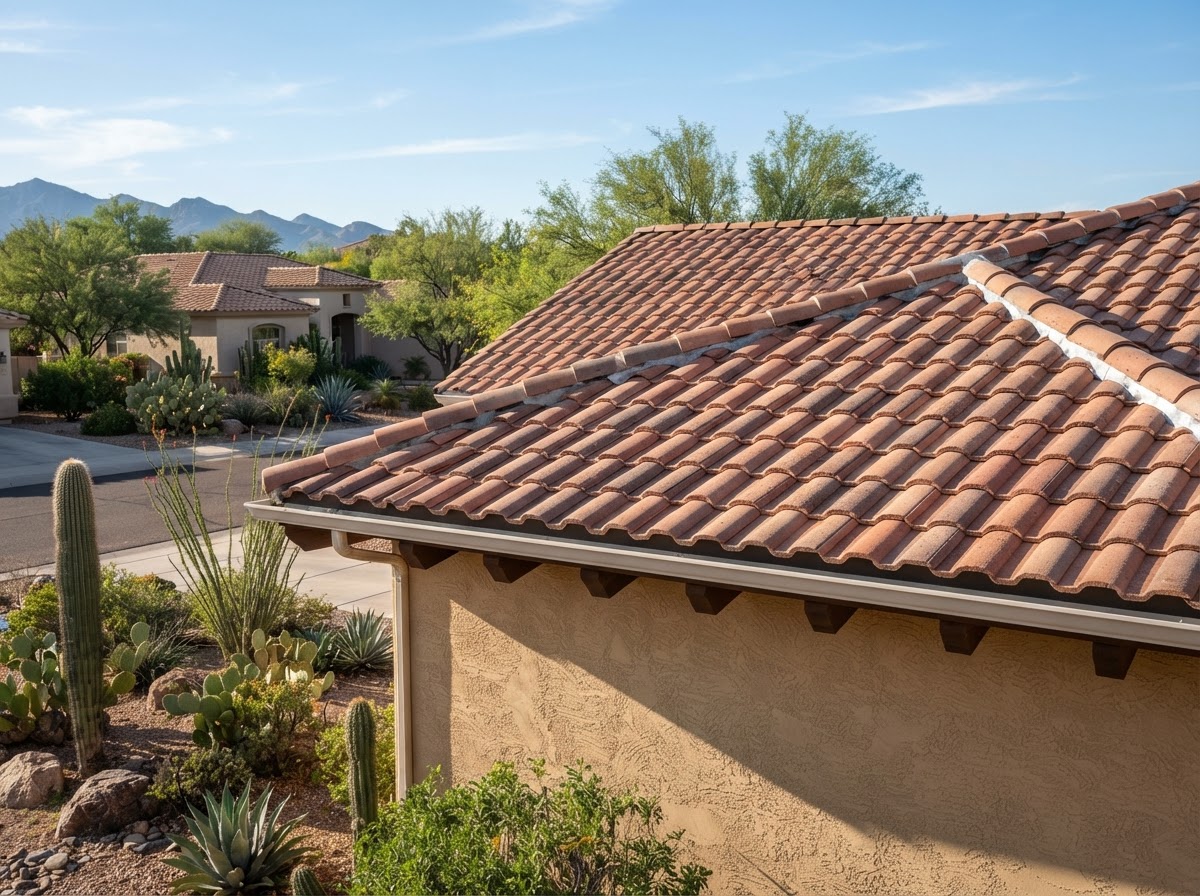
Tile Roofing
Clay and concrete tile engineered for intense desert sun exposure.
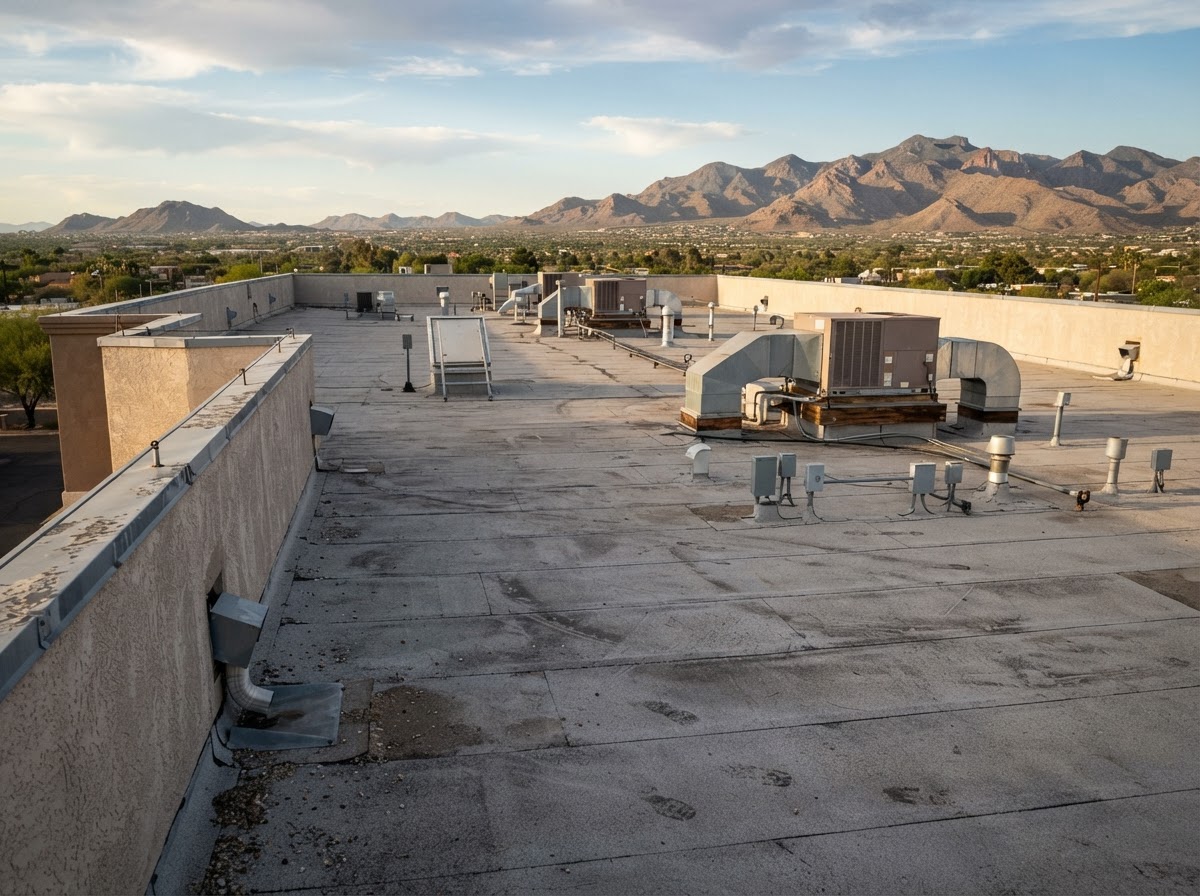
Flat Roofing
Built-up and single-ply flat systems for low-slope applications.

Shingle Roofing
Durable architectural shingle systems for sloped residential roofs.
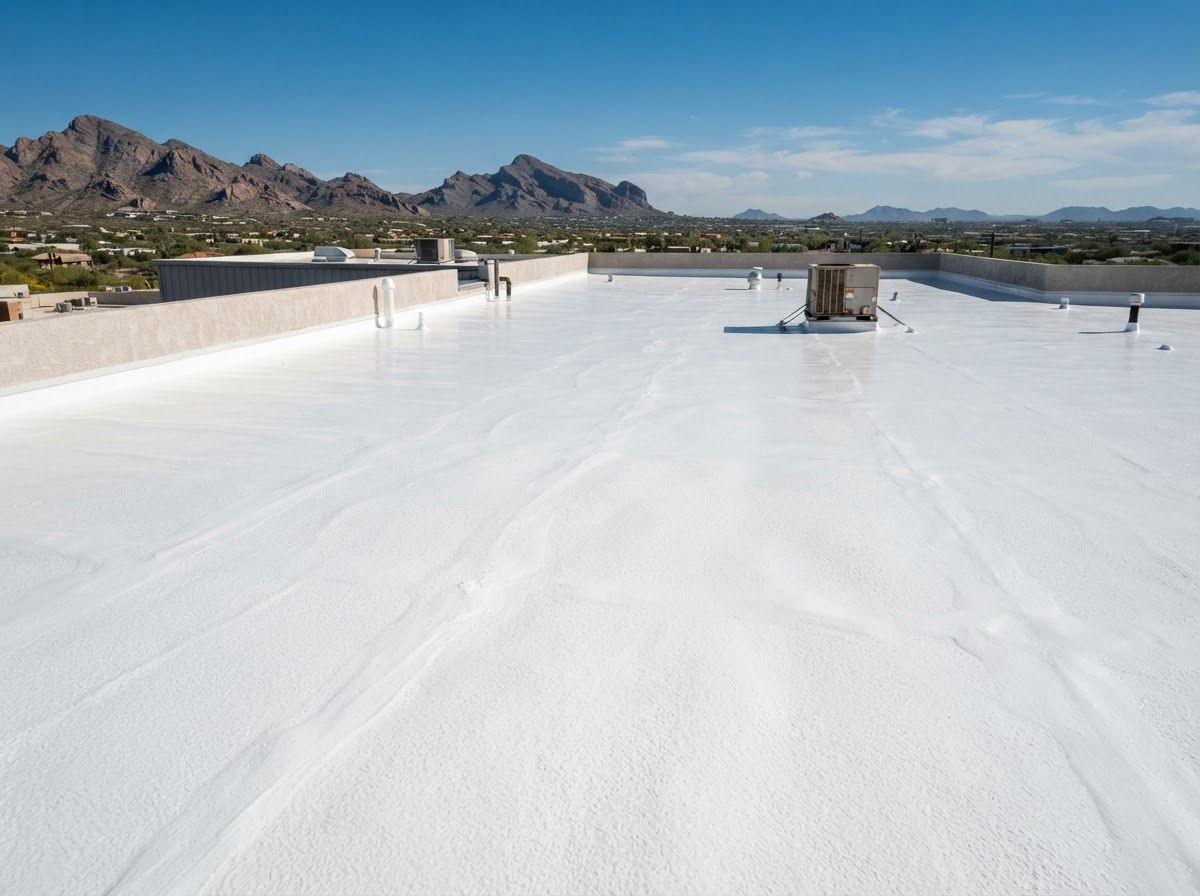
Foam Roofing
Seamless spray foam for insulation and waterproofing performance.
Common Questions
Straightforward answers about this service and how it applies to Arizona roofing systems.
After a significant storm with high wind or debris, yes. Damage can be invisible from the ground, especially displaced tile or lifted flashing that compromises the underlayment.
Yes. We document the damage, location and extent so you have a clear record for your claim or your own planning.
Often, yes. When damage is isolated to a section, a targeted repair is usually the right scope. We document the condition so you know when a repair will hold and when more is warranted.
We prioritize post-storm assessments. Contact our team and we will schedule an inspection as quickly as we can, with documentation you can act on.
Not Sure What Your Roof Needs?
Start with a professional roof inspection. We will evaluate the condition of the roofing system and explain the available options clearly.